
There is no reliable flat price for tree removal in North Texas because the tree’s size is only one part of the job. The final cost depends on its condition, distance from structures and utilities, crew access, rigging or equipment needs, debris volume, and whether stump work is included. A smaller hazardous tree beside a roof can cost more to remove than a larger tree in an open yard. The most useful estimate is an itemized, site-specific scope rather than a broad online average.
Homeowners often ask for a price based on a photo or trunk diameter. Photos can help establish urgency and prepare for a visit, but they rarely show every factor that controls the work. A removal plan must account for where each section can move, what is beneath it, how workers and equipment can enter the property, and what the site should look like when the job is finished.
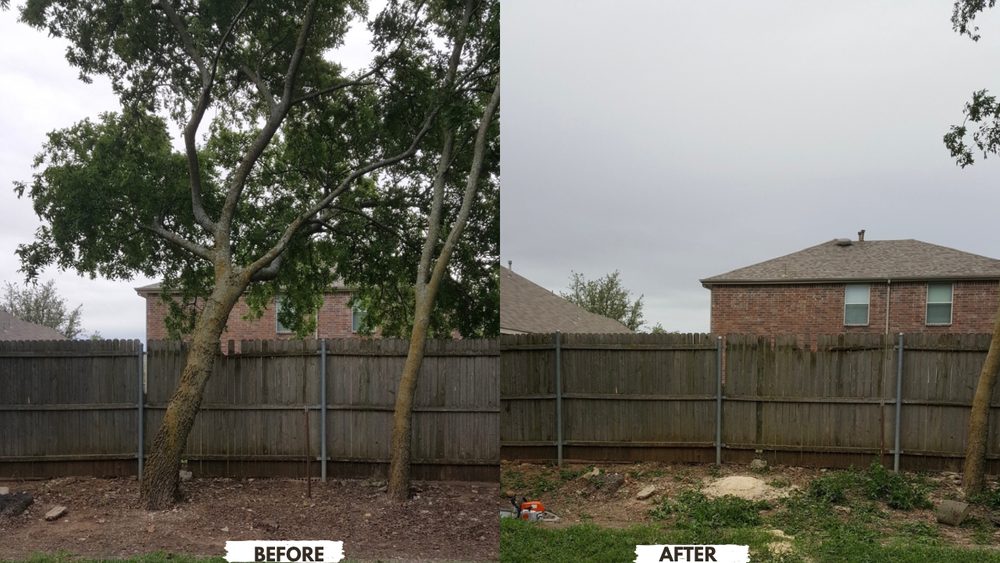
What Determines Tree Removal Cost in North Texas?
A professional quote reflects the labor, equipment, time, and control required to complete the agreed scope. These are the factors that usually have the greatest effect.
1. Tree size and wood volume
Height matters, but trunk diameter, canopy spread, number of stems, and wood density also affect the amount of cutting, lowering, hauling, and processing. Two trees of similar height can require very different workloads.
2. Tree condition and stability
A sound tree can behave more predictably than one with a split trunk, suspended limb, root movement, or extensive decay. Hazardous wood may not support normal climbing or rigging methods, so the plan may require more controlled sections, different anchor points, or specialized access. Review the warning signs in our guide to hazardous trees after a North Texas storm.
3. What the tree could strike
Roofs, fences, pools, sheds, vehicles, landscaping, neighboring property, and utility lines reduce the usable drop zone. When material cannot be allowed to fall freely, workers may need to dismantle the tree in smaller pieces and lower them with ropes.
4. Access for the crew and equipment
An open front yard with a clear route is different from a fenced backyard reached through a narrow side gate. Slopes, soft ground, septic systems, irrigation, retaining walls, and limited street access can affect which equipment can be used and how far debris must be carried.
5. Rigging, climbing, and equipment requirements
Some removals can be completed with straightforward climbing and ground operations. Others require extensive rigging, lifts, loaders, or other equipment. Equipment is chosen for control and site protection, not simply because the tree is tall.
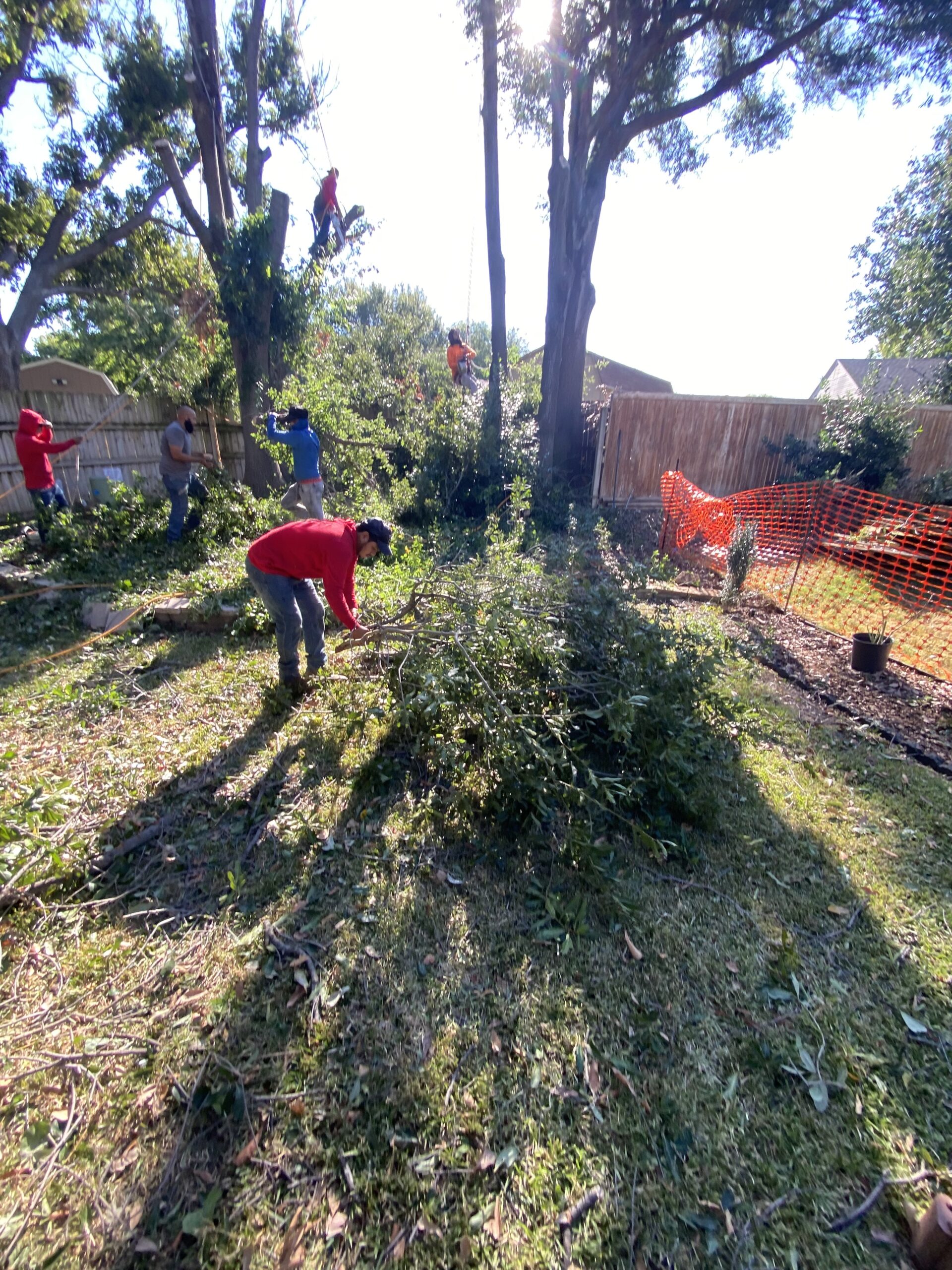
6. Debris handling and final cleanup
Clarify whether the quote includes hauling logs and brush, chipping smaller material, raking the work area, cutting firewood-sized sections, or leaving any wood onsite. The same tree can produce substantially different quotes when cleanup scopes differ.
7. Stump grinding or full stump removal
Removing the tree normally leaves a stump unless the scope says otherwise. Stump grinding reduces the visible stump below grade for many landscape goals, while full stump removal is more involved and may be appropriate for grading, construction, or deeper site clearing. Ask whether surface roots, grindings, backfill, and haul-off are included.
8. Timing and emergency conditions
Planned work is easier to schedule and prepare than an unstable tree blocking access or threatening a structure after a storm. Emergency response may require rapid mobilization and work around damaged structures, saturated soil, or unstable wood. If the tree can fail further, safety should guide the timing rather than price alone.
Clay soil, tight subdivisions, and mature canopies change the plan
Across McKinney, Allen, Frisco, Plano, Prosper, and nearby communities, mature trees often share limited space with homes, alleys, fences, pools, and utility corridors. Heavy rain can also soften clay soil and restrict equipment access. A local site visit helps identify these constraints before the crew arrives.
Why Online Tree Removal Averages Can Mislead
Online cost guides commonly publish a single average or a very wide range. Those numbers may combine small open-yard removals, complex hazardous trees, different cleanup scopes, and markets with different labor and disposal conditions. They also age quickly. A broad figure can be useful for recognizing that tree work varies, but it cannot tell you what your property requires.
| Removal scenario | Typical cost pressure | Reason |
|---|---|---|
| Smaller tree in an open yard | Usually lower complexity | Clear access and a usable drop zone may reduce rigging, carrying, and site protection. |
| Mature tree beside a house or pool | Usually higher complexity | Sections may need to be cut smaller and lowered under control. |
| Dead, split, or storm-damaged tree | Condition dependent | Compromised wood may restrict climbing and create unpredictable loads. |
| Backyard tree with narrow access | Usually more labor | Equipment options may be limited and debris may need to travel farther by hand. |
| Tree plus stump work | Additional scope | Grinding or extracting the stump requires separate equipment, labor, and cleanup. |
What Should a Tree Removal Estimate Include?
A written estimate should make it easy to understand what happens before the first cut and what remains after the crew leaves. Look for a clear answer to each of these questions:
- Which tree or trees are included? Identify the location and agreed work so there is no confusion on a multi-tree property.
- Is the whole tree being removed? Confirm whether the scope is removal, pruning, hazard reduction, or a combination.
- How will nearby property be protected? The plan should account for roofs, fences, hardscape, landscaping, and access surfaces.
- What happens to brush and logs? Specify chipping, hauling, onsite wood, and final cleanup.
- Is stump work included? Tree removal, stump grinding, and full stump extraction are different scopes.
- What could change the price? Hidden metal, inaccessible gates, utility conflicts, unstable structures, or a substantially different site condition should be discussed before work begins.
- Who handles access or local requirements? Confirm responsibility for gates, vehicle relocation, HOA rules, municipal requirements, and utility coordination when applicable.
How Do You Compare Tree Removal Quotes?
Compare scope before comparing totals. A lower number may exclude hauling, stump work, site protection, or final cleanup that another estimate includes. Ask each company to describe the planned result in plain language.
| Compare | Question to ask |
|---|---|
| Removal method | Will the tree be felled, climbed and dismantled, or removed using access equipment? |
| Property protection | How will sections be controlled around my roof, fence, pool, driveway, or landscaping? |
| Cleanup | Are all brush and logs hauled, and what condition will the work area be left in? |
| Stump | Is grinding or removal included, how deep, and what happens to the grindings? |
| Credentials and coverage | Can the company provide current documentation appropriate to the work? |
| Payment and changes | When is payment due, and how are approved scope changes documented? |
A detailed quote is not automatically the most expensive quote. It is simply easier to evaluate because the work, exclusions, and finished condition are visible before the job starts.
Can You Reduce Tree Removal Cost Safely?
Some preparation can improve efficiency without compromising safety:
- Schedule declining or unwanted trees before they become urgent when conditions allow.
- Move vehicles, furniture, toys, and removable obstacles away from the work and access areas.
- Unlock gates and point out irrigation, septic components, landscape lighting, and fragile hardscape.
- Ask whether combining multiple approved tree-care tasks into one visit reduces repeated setup and travel.
- Decide in advance whether wood should be hauled or left in usable sections.
- Choose the stump scope based on the next use of the space instead of automatically ordering full extraction.
Do not reduce cost by handling unstable limbs, climbing, or cutting tensioned wood yourself. Large-tree work combines falling material, chainsaws, rigging forces, and property exposure. If preservation is still practical, professional tree pruning may solve the problem without removing the whole tree.
Do Permits or HOA Rules Affect the Price?
Requirements vary by city, subdivision, property type, tree location, and development agreement. Some projects may also involve utility coordination or protected-area restrictions. Before work is scheduled, check current municipal and HOA requirements for the specific property rather than assuming rules are the same across North Texas. Any required application, documentation, replacement planting, or access arrangement can affect timing and scope.
Frequently Asked Questions
Can Harvest quote tree removal from a photo?
Photos help show the tree, nearby targets, and access, but an on-site look is often needed to confirm condition, equipment options, debris handling, and the complete scope. Send wide and close views taken safely; Harvest can explain the next step.
Is stump grinding included with tree removal?
Do not assume it is. Tree removal usually addresses the standing tree, while stump grinding or full stump removal is a separate decision. The written estimate should state exactly what is included.
Why does removing a dead tree sometimes cost more?
Dead or decayed wood may be less predictable and may not provide safe climbing or rigging points. Cost depends on the actual condition, location, and removal method, not simply whether the tree is alive.
Does tree species affect removal cost?
It can. Wood density, branching structure, trunk form, and canopy spread affect cutting, rigging, processing, and debris volume. Species is one factor within the whole site plan.
Is emergency tree removal more expensive?
It can involve added complexity because the crew may need to mobilize quickly and work around unstable wood, blocked access, storm debris, or damaged structures. Request emergency tree service when safety or access cannot wait.
What photos should I send for an estimate?
From safe ground, photograph the whole tree, trunk base, canopy, nearby structures, and the route from the street or driveway to the tree. Include gates and narrow passages. Never stand beneath damaged limbs or approach electrical lines for a photo.
Does homeowners insurance pay for tree removal?
Coverage depends on the policy and circumstances, including whether the tree damaged a covered structure or is simply standing and unwanted. Ask your insurer about coverage and documentation; a tree company should not interpret your policy for you.
Planning Resources
- International Society of Arboriculture tree-risk guidance explains how tree condition, likelihood of failure, and nearby targets shape risk-management decisions.
- ISA guidance for hiring tree-care professionals outlines useful questions about estimates, references, insurance, and work practices.
- Harvest Tree Service areas lists the North Texas communities currently served and where to confirm availability.