
For most established shade trees in North Texas, late fall through winter is the best time for routine structural pruning. Dormancy makes branch structure easier to inspect and avoids adding unnecessary stress during summer heat. Oaks need extra care: Texas oak wilt guidance says to avoid wounding oaks from February through June and to paint every fresh oak cut immediately, year-round. Dead, broken, hanging, or storm-damaged limbs should be addressed when they create a hazard rather than left until the ideal season.
Pruning is not simply an annual haircut. Every cut changes how a tree distributes weight, closes wounds, and grows in the future. The right month depends on the species, the tree’s condition, and the reason for pruning. A mature live oak near a roof, a young tree developing its permanent structure, and a flowering ornamental should not automatically receive the same schedule.
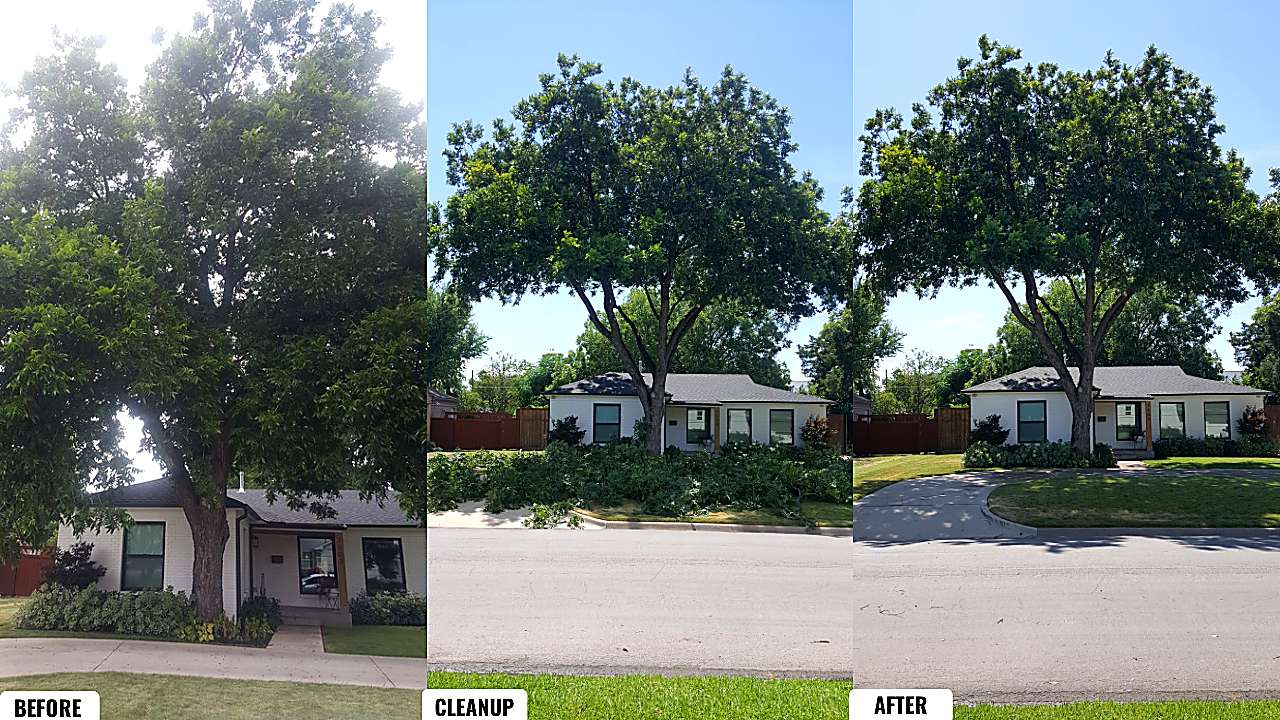
What Is the Best Time to Prune Trees in North Texas?
Late November through January is a practical target for much of the routine pruning performed on North Texas shade trees. Many deciduous trees are dormant, leaves no longer hide weak branch unions, and the tree is not simultaneously coping with peak summer heat. Exact timing can shift with warm winters, early bud break, tree species, and the work being proposed.
- Schedule routine structural work in dormancy. Removing crossed, poorly attached, or competing branches is easier to plan when the canopy structure is visible.
- Treat oak timing as a separate decision. Avoid pruning oaks from February through June when possible, and immediately paint all oak wounds in every season.
- Delay optional heavy pruning during heat or drought. North Texas trees already managing high temperatures and limited soil moisture do not need an additional avoidable stress.
- Do not postpone a genuine hazard. A cracked limb over a driveway or a broken branch hanging after a storm needs prompt assessment regardless of the calendar.
Calendar dates are a guide, not the diagnosis
McKinney, Frisco, Allen, Plano, and nearby communities can move quickly from winter dormancy to spring growth, then into prolonged summer heat. Before scheduling, identify the tree and decide whether the goal is health, structure, clearance, flowering, or hazard reduction. Those facts matter more than choosing a month from a generic national chart.
North Texas Tree Pruning by Season
| Season | Usually appropriate for | Main cautions |
|---|---|---|
| Winter | Routine structural pruning, deadwood removal, young-tree training, and clearer inspection of deciduous canopies. | For oaks, complete planned work before the February-through-June high-risk period whenever possible. |
| Spring | Limited corrective work and pruning certain spring-flowering ornamentals after their bloom cycle. | Avoid routine oak pruning. New growth and active pests can make unnecessary cuts poorly timed. |
| Summer | Removing hazards, correcting a limited clearance problem, or managing damage that cannot wait. | Large reductions during extreme heat or drought can compound stress. Avoid removing healthy canopy without a clear objective. |
| Fall | Inspection, planning, deadwood removal, and preparing dormant-season work. | Do not assume early fall means full dormancy. Major optional pruning can often wait until leaves drop and conditions cool. |
Winter: the strongest general-purpose window
Dormant-season pruning gives the crew a clearer view of branch spacing, defects, and the tree’s main framework. It is often the best time to improve structure without removing foliage the tree is actively using. Winter scheduling can also put clearance and weak-limb concerns in order before spring storms.
Spring: be selective, especially around oaks
Spring is not a blanket no-prune season for every tree, but it is the period when North Texas homeowners should be most cautious with oaks. Texas oak wilt authorities report that sap-feeding beetles and fungal mats are most active in spring and advise avoiding oak wounds from February through June. For non-oaks, species and flowering habit determine whether limited post-bloom work makes sense.
Summer: prioritize safety and restraint
Summer foliage can reveal dead branches that failed to leaf out, but major canopy reduction during intense heat can remove shade-producing leaf area when a tree needs it most. Targeted work may still be appropriate for broken limbs, roof or street clearance, and storm damage. The scope should match the problem rather than turning into an unnecessary canopy overhaul.
Fall: inspect now and plan the winter work
Fall is useful for identifying deadwood, rubbing limbs, low clearance, and weak attachments before leaves drop. Later in the season, routine work may begin as trees enter dormancy. When there is no immediate hazard, waiting for a clearer dormant canopy can improve pruning decisions.
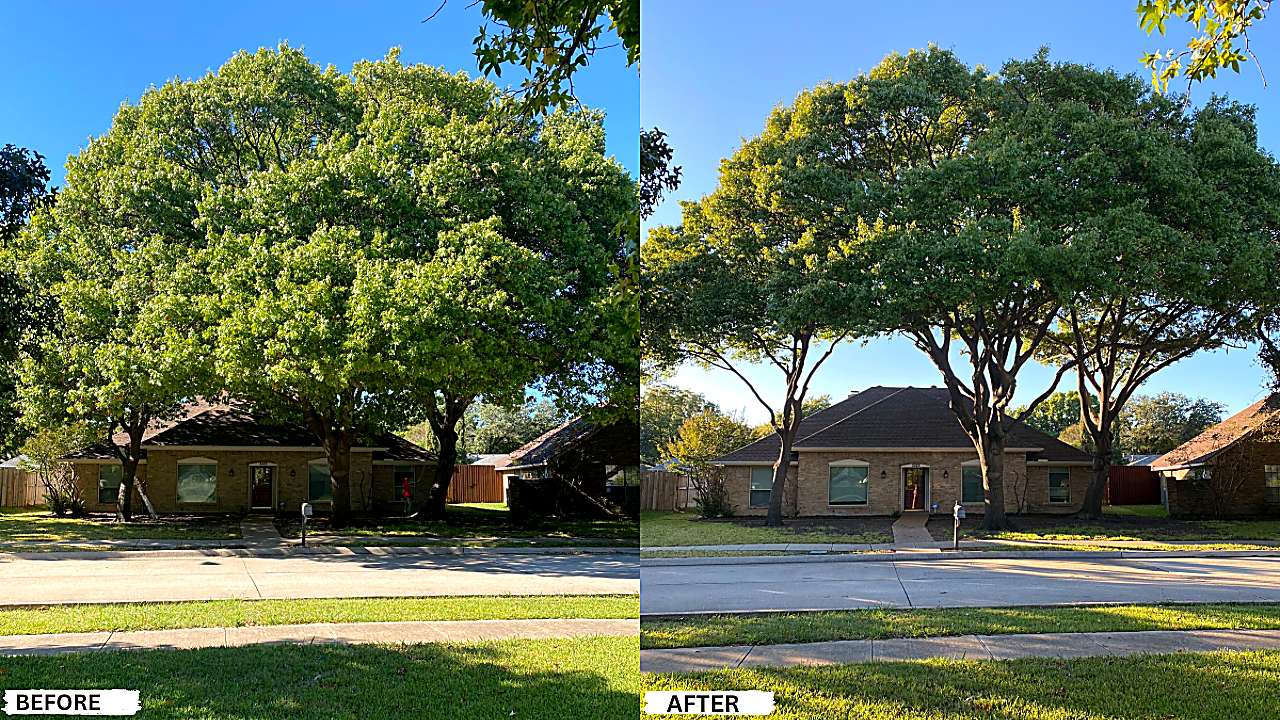
Does the Best Pruning Time Change by Tree Type?
Yes. A seasonal rule is only a starting point. Species, age, health, flowering cycle, and pruning objective can change the recommendation.
Live oaks and red oaks
Plan routine oak pruning for late fall or winter and avoid February through June whenever possible. Texas A&M Forest Service guidance says every fresh oak wound should be painted immediately, regardless of season. This oak-specific recommendation differs from most other trees, for which wound dressing is generally unnecessary.
Crape myrtles
Late winter is commonly used to remove dead, damaged, crossing, or poorly placed growth before spring leaf-out. Avoid topping or cutting all stems back to the same height. Repeated severe cuts create weakly attached shoots and distort the tree’s natural form.
Spring-flowering ornamentals
Trees that bloom on growth formed the previous year may lose flowers if pruned heavily before bloom. When flowering is the priority, corrective pruning is often planned shortly after flowering, while dead or unsafe limbs remain an immediate concern.
Young shade trees
Small, intentional cuts made while a tree is young can establish one dominant leader, improve branch spacing, and reduce the need for larger corrective cuts later. Texas A&M Forest Service notes that properly pruned young trees generally require less corrective work as they mature.
When Should Pruning Happen Immediately?
The ideal season does not override an active safety problem. Arrange an assessment promptly when you notice:
- A broken or hanging limb over a home, driveway, sidewalk, play area, or neighboring property.
- A fresh crack or split where a major branch joins the trunk or another large limb.
- Storm damage that changed the tree’s balance or left branches suspended in the canopy.
- Contact with a structure that is damaging roofing, siding, or another surface.
- Utility conflicts. Stay away from energized lines and contact the utility rather than attempting the cut yourself.
Removing the immediate hazard does not require unnecessary pruning elsewhere in the canopy. A focused response can make the site safer while preserving optional structural work for a better season. For weather-related concerns, review the guide to spotting hazardous trees after a North Texas storm.
What Should a Good Pruning Plan Include?
A useful estimate should explain why each part of the canopy needs work. Before approving a pruning job, ask:
- What is the objective: structure, clearance, deadwood, storm repair, or appearance?
- What species is the tree, and does its timing differ from the general winter window?
- How much live canopy is expected to be removed?
- Will the natural canopy shape be retained rather than topped?
- How will nearby roofing, fencing, vehicles, landscaping, and irrigation be protected?
- For an oak, will every cut be painted immediately?
- Are cleanup and branch hauling included?
Harvest provides tree trimming and pruning across McKinney and surrounding North Texas communities. The recommendation should fit the individual tree and property, not a preset amount of canopy removal.
Frequently Asked Questions
What month is best for pruning trees in North Texas?
For many established shade trees, late November through January is a useful general window. Species, weather, tree health, and the reason for pruning can shift that timing.
Can trees be pruned in summer?
Yes, when work is limited and necessary for safety, storm damage, or a specific clearance problem. Avoid optional heavy pruning during extreme heat or drought because the tree is already under environmental stress.
When should oak trees be pruned in Texas?
Texas oak wilt guidance recommends late fall and winter. Avoid pruning oaks from February through June whenever possible, and immediately paint every fresh oak cut throughout the year.
Should tree pruning wait after a storm?
Not when limbs are broken, hanging, cracked, or threatening people or property. Address the hazard first, then schedule nonessential corrective work for a better season if appropriate.
How often should mature trees be pruned?
There is no responsible one-size-fits-all interval. Inspect trees periodically and after major storms, but prune only when there is a defined health, structural, clearance, or safety objective.
Is tree topping the same as pruning?
No. Topping removes large portions of the crown without respecting natural branch structure. It can trigger weak, fast-growing shoots and create future maintenance problems. Selective pruning retains the tree’s form and addresses specific branches.
North Texas Pruning Resources
- Texas A&M Forest Service pruning guidance explains why every cut should have a purpose, how young-tree training reduces later corrections, and why mature-tree work may require professional equipment.
- Texas Oak Wilt management guidance covers the February-through-June no-prune period for oaks and immediate wound painting.