
Stump grinding is usually worth it for North Texas homeowners when a stump creates a trip or mowing hazard, takes up usable yard space, keeps producing sprouts, or stands in the way of new landscaping. It may be reasonable to wait when the stump is in an unused natural area and is not affecting safety, access, drainage, or future plans.
After a tree is removed, the stump can feel like a small loose end. On a typical residential lot in McKinney, Frisco, Allen, Plano, or elsewhere in Collin County, however, that low obstacle often sits close to a lawn route, sidewalk, fence, driveway, irrigation zone, or future planting area. Whether grinding is worthwhile depends less on appearance alone and more on what the stump prevents you from doing.
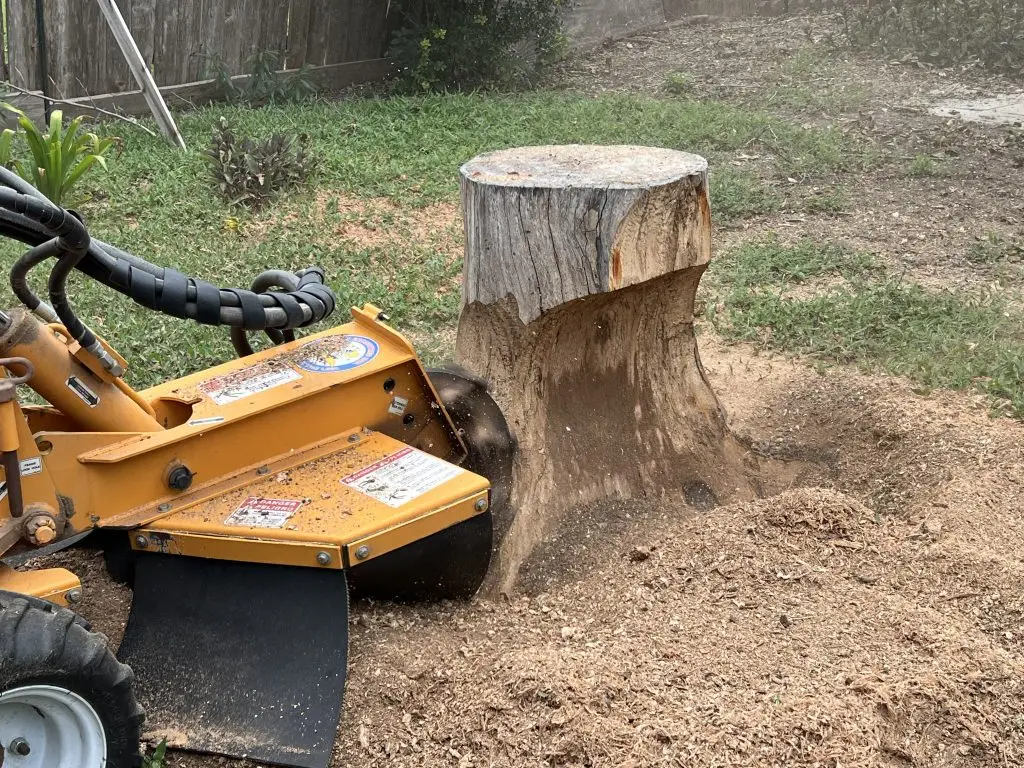
When Is Stump Grinding Worth It?
Grinding is most valuable when removing the stump solves a specific property problem. Use this practical checklist:
- The stump is in an active part of the yard. A stump near a walkway, play area, driveway, patio, or regular mowing route is easy to trip over or strike with lawn equipment.
- You want the space back. Grinding can open the area for lawn repair, a garden bed, hardscape planning, or a better traffic path through the yard.
- The stump keeps sprouting. Some species continue sending up shoots after the trunk is cut. Grinding the main stump can reduce recurring maintenance, although established roots may still produce occasional sprouts.
- The tree removal does not look finished. A prominent stump can make an otherwise clean front or back yard feel incomplete.
- Decaying wood is becoming a concern. An old stump holds moisture and can provide habitat for insects and fungi. Grinding removes most of that concentrated wood at the surface, but it is not a guarantee against every pest elsewhere on the property.
A stump may be lower priority if it is well away from people, equipment, structures, and planned improvements. Leaving one in a naturalized back corner can be a reasonable choice when gradual decay will not interfere with how the property is used.
Storm cleanup and compact suburban lots change the calculation
North Texas storms can turn tree removal into an urgent safety job, while stump work is often scheduled after the immediate hazard is gone. On smaller residential lots, access through gates and the stump’s distance from fences, concrete, irrigation, and neighboring property all affect the equipment and approach. A site assessment is more useful than a generic online price.
What Does Stump Grinding Actually Remove?
A stump grinder uses a rotating cutting wheel to reduce the trunk base and accessible root flare into wood chips. The operator works below the surrounding grade so the visible obstruction can be covered and the surface restored.
Grinding normally does not remove the entire underground root system. Large lateral roots remain in the soil and decay over time. That is sufficient for many lawn and landscape goals, but it matters if the site will support a footing, utility trench, pool, driveway, or another improvement that requires clear excavation.
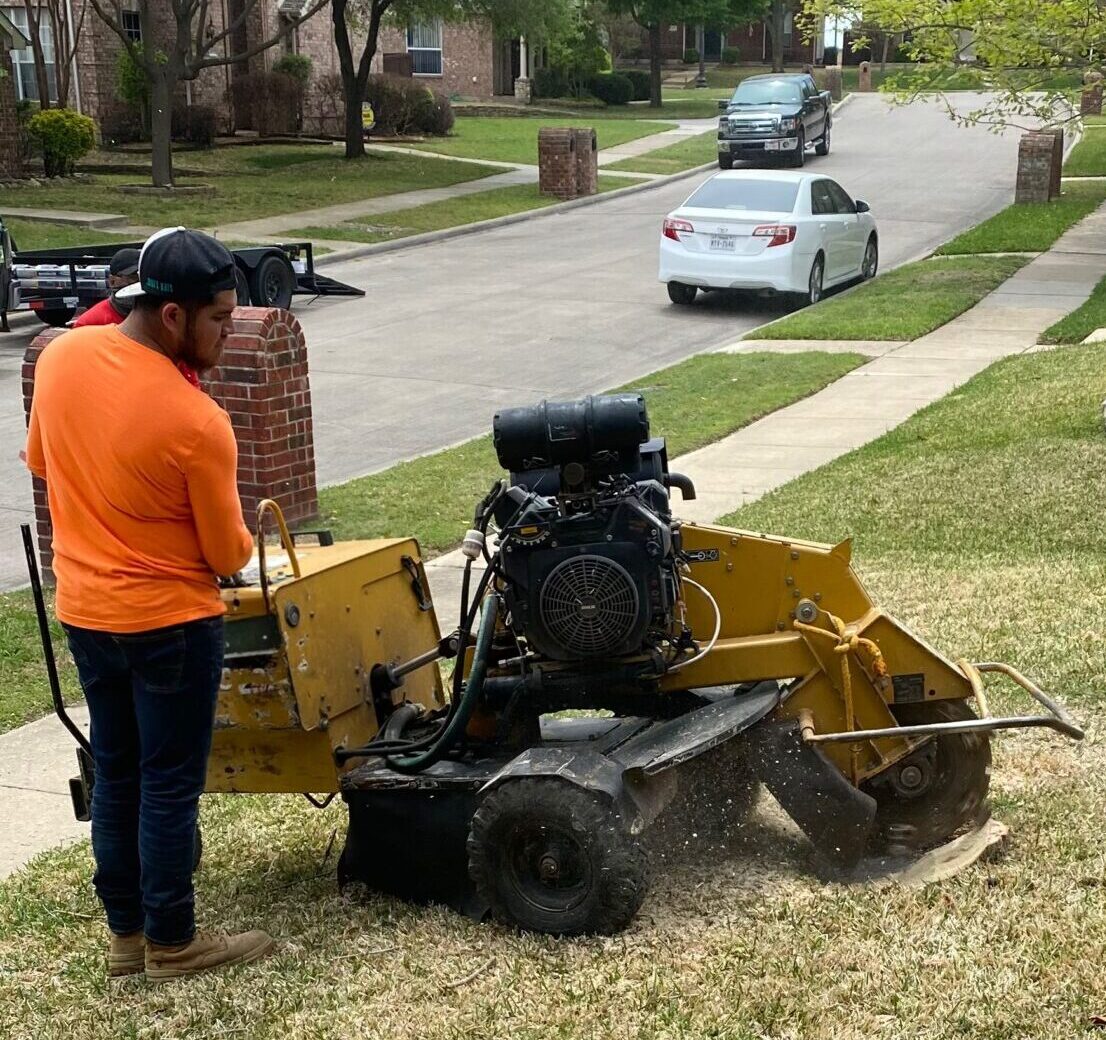
Stump Grinding Versus Full Stump Removal
| Consideration | Stump grinding | Full stump removal |
|---|---|---|
| What is removed | The stump and accessible flare are ground below grade; most roots remain. | The stump and root ball are excavated, with additional roots removed as the project requires. |
| Site disturbance | Usually more contained, with chips and a smaller area to restore. | Requires more digging and commonly leaves a larger hole and disturbed soil. |
| Best fit | Lawn repair, hazard reduction, curb appeal, garden beds, and routine residential cleanup. | Construction, major grade changes, or plans that require the root mass to be physically cleared. |
| Planning question | How deep must the area be cleared for its next use? | Is excavation access available, and what nearby surfaces or utilities must be protected? |
If the goal is simply to make a yard safer and easier to maintain, professional stump grinding is often the less disruptive choice. If the location is being prepared for construction or the root ball itself must come out, review the more extensive stump removal process.
What Determines the Cost of Stump Grinding?
There is no dependable one-price answer because the stump diameter is only one part of the work. A local estimate should consider:
- the diameter, height, species, condition, and root flare;
- the number of stumps being handled during the same visit;
- gate width, slope, soft ground, and the route required to reach the site;
- proximity to fences, foundations, paving, irrigation, landscape lighting, and buried utilities;
- the grinding depth needed for grass, planting, or a future project; and
- whether the chips stay on site, are spread, or are hauled away and the depression backfilled.
For that reason, a quote based on a clear photo and accurate measurements can be useful, but an on-site look is better for tight access or a stump close to improvements. Harvest serves McKinney and surrounding North Texas communities, so recommendations can account for the property rather than rely on national averages.
What Should Happen Before and After Grinding?
Before the work
The work area and equipment route should be checked for access, breakable surfaces, irrigation components, landscape lighting, and overhead or underground conflicts. Tell the crew about anything buried that you know is present. Texas 811 provides the state’s process for requesting utility locates before excavation; private lines such as some irrigation or low-voltage systems may require separate identification.
During the work
The area should be controlled for people, pets, vehicles, and breakable objects because a grinder can throw chips and small debris. The operator then makes repeated passes until the agreed area and depth are cleared.
After the work
Grinding produces a mixture of wood chips and soil. Some material can be reused as mulch, while excess may need removal. If the goal is lawn restoration, the depression generally needs to be settled and filled with suitable soil before seed or sod is installed. Because buried wood continues to decompose, some settling later is normal.
Can You Plant Another Tree in the Same Place?
Usually, planting a replacement tree a short distance from the old trunk location is better than forcing it into the same root-filled hole. The remaining roots, wood chips, and disturbed soil can make moisture, stability, and root development harder to manage. If the exact location is essential, discuss the required grinding or excavation depth before work begins.
Texas A&M Forest Service advises selecting a tree suited to the site, providing enough room for mature roots and canopy, planting with the root collar at or slightly above grade, and checking drainage before planting. Those fundamentals matter in North Texas yards where drainage and summer watering can determine whether a replacement establishes successfully.
Questions to Ask Before Hiring a Stump-Grinding Service
- What grinding depth is included, and is that depth appropriate for my next use?
- Are exposed surface roots included or quoted separately?
- Will chips be left, spread, or hauled away?
- Is backfilling or final soil preparation included?
- What access width does the grinder need?
- How will nearby concrete, fencing, irrigation, and landscaping be protected?
- Should utility or private-line locating be completed before the appointment?
Frequently Asked Questions
Is stump grinding always necessary after tree removal?
No. It is optional when the stump is isolated and creates no practical problem. It becomes worthwhile when safety, mowing, appearance, regrowth, or future use of the space matters.
Will a tree grow back after the stump is ground?
The main stump cannot regrow once it has been ground away, but some species can send shoots from surviving roots. The likelihood depends on the species and condition of the root system.
Does stump grinding remove all roots?
No. Standard grinding removes the stump and accessible flare below grade while most roots remain underground and decay gradually.
How soon can grass be restored?
Grass restoration can begin after excess chips are removed and the depression is filled and leveled with suitable soil. Allow for possible settling as the remaining organic material decomposes.
Is DIY stump grinding a good idea?
Rental equipment does not remove the risks created by powerful cutting teeth, thrown debris, slopes, hidden utilities, irrigation, and tight access. Professional assessment is especially valuable near structures or when the site is not open and level.
Planning Resources
- Texas 811 for utility-locate information before excavation.
- Texas A&M Forest Service tree-planting guidance for site selection, drainage, planting depth, mulch, and establishment.